Case
Study1
Study1
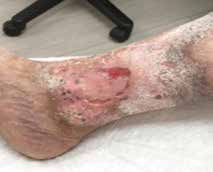
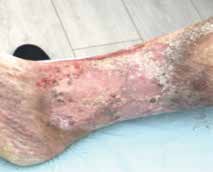
Patient: 80-years-old Female
Clinical presentation: 68cm² VLU on left lower leg
Therapeutic outcome: ≥90% debridement and ≥75% granulation by day 7, STSG on week 1 and wound healing in 8 weeks
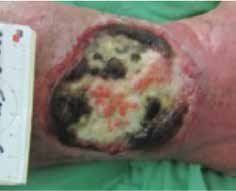
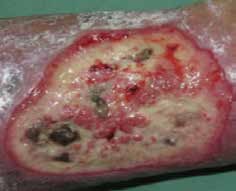
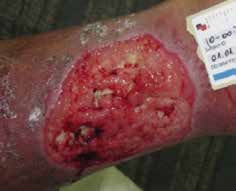
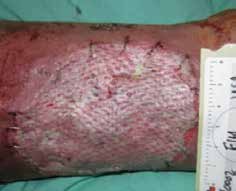
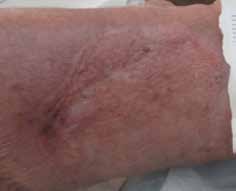
Treatment timeline

A Global Study for the Treatment of Venous Leg Ulcers with EscharEx
Referral Opportunity:
We invite you to refer your patients with venous leg ulcers to our ongoing VALUE clinical trial, exploring a new treatment of wound debridement. The VALUE phase 3 global clinical trial provides potential access to innovative enzymatic debridement, and an opportunity for your patients, suffering from VLU, to receive advanced and comprehensive medical treatment for their chronic wound.
The innovative treatment, EscharEx, is based on a sterile powder made of enzymes extracted from the pineapple plant mixed with excipients. When the EscharEx powder is mixed with sterile water it creates a gel mixture, easy to apply. EscharEx was proven in 3 former phase II clinical trials to remove fast and effectively non-viable tissue from the wound bed, superior to competitors. Moreover, EscharEx was shown to promote healthy granulation tissue, hence prepare the wound for healing faster and in higher incidence than competitors (Gel vehicle and non-surgical SOC treatments).

All study-related treatments, dressings, and compression therapy are provided at no cost.

Patients receive frequent evaluation and care by experienced wound professionals, following a structured clinical protocol.

Particularly appropriate for patients whose VLUs are slow to progress under standard care.

Participation shifts intensive wound management to the clinical site, helping reduce staff time and resource demands.

Participants receive transportation support and compensation for their time.

The trial is conducted under strict regulatory and ethical standards, including FDA oversight.

Offering access to clinical research reflects a commitment to exploring advanced treatment options for patients and their families.
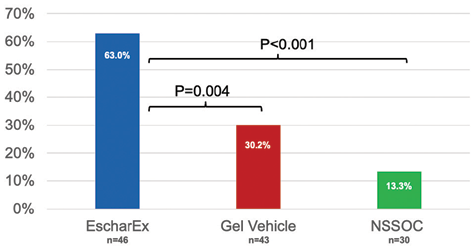
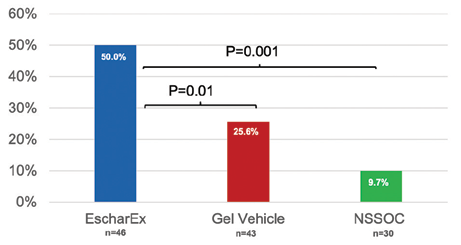
EscharEx® achieved a significantly higher incidence of complete debridement and of Wound bed Prepared compared to both placebo (primary end point) and Non- Surgical SOC
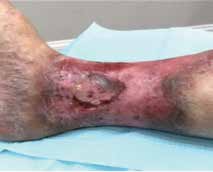
Patient: 80-years-old Female
Clinical presentation: 68cm² VLU on left lower leg
Therapeutic outcome: ≥90% debridement and ≥75% granulation by day 7, STSG on week 1 and wound healing in 8 weeks
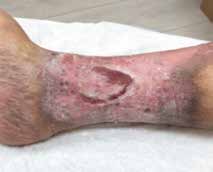
Patient: 30-years-old Male
Clinical presentation: 80.75cm² VLU on left leg
Therapeutic outcome: ≥90% debridement and ≥75% granulation by day 3, STSG on week 1 and wound healing in 2 weeks.
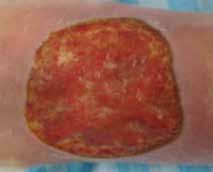
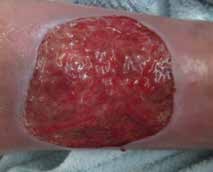
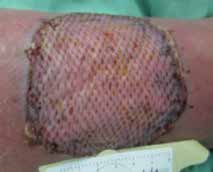
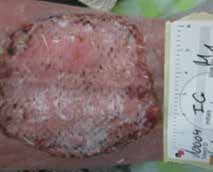
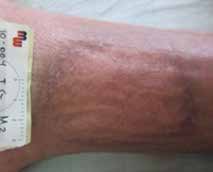
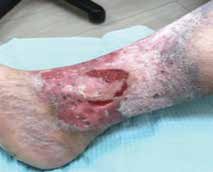
Patient: 77-years-old Male
Clinical presentation: 5.4cm² VLU on Right lower leg
Therapeutic outcome: Complete debridement and complete granulation by day 3, STSG during week 1 and wound healing in 4 weeks.
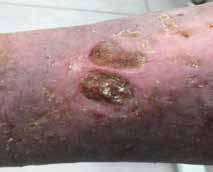
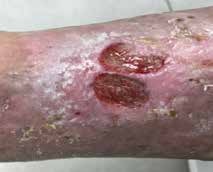
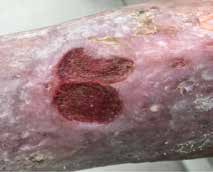
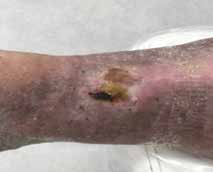
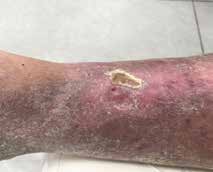
Patient: 68-years-old Female
Clinical presentation: 10.1cm² VLU on right lower leg
Therapeutic outcome: Complete debridement and complete granulation by day 3 and wound healing in 5 weeks.
Exclusion criteria from the ClinicalTrials.gov listing. View all inclusion and exclusion criteria ↗
Contact a study site near you for eligibility assessment if you have patients who meet the above criteria.
The site team will guide patients through enrollment.
Showing all 11 sites, grouped by state.
Yes. Patients are randomly assigned to one of two groups. One group will receive the study medicine, and the other will receive a placebo, with an equal chance of being in either group. The placebo looks and feels like the real medicine but doesn't have the active ingredient (bromelain). It contains the same ingredients as the EscharEx® powder, but without the active enzymes. The study is double-blind.
Patients will be asked to visit the study center up to 24 times within about 6 months for regular applications of the study treatment and monitoring to check how well the wound is healing. Patients receive frequent evaluation and care by experienced wound professionals, following a structured clinical protocol.
All study-related treatments, dressings, and compression therapy are provided at no cost. Participants receive transportation support and compensation for their time.
Before joining the study, patients receive all the important information about its purpose, procedures, potential risks, and benefits. They have the opportunity to ask questions and decide whether they want to participate. Consent is given voluntarily and in writing, and patients can withdraw from the study at any time without providing a reason.
The primary endpoints are the incidence of complete debridement (assessed up to 2 weeks) and time to complete wound closure (assessed up to 12 weeks). Other outcomes include complete granulation tissue, time to wound bed preparation, pain (NPRS), target wound infection, adverse events and immunogenicity.
The full listing, including all inclusion and exclusion criteria, is on ClinicalTrials.gov (NCT06568627). Patients can find information for themselves at www.thevaluetrial.com.